


Program integrity issues have heated up in the hospice industry in recent years, garnering negative public attention around end-of-life care delivery. Hospices are seeking ways to ensure strong access and sustainability as they weather the impacts.
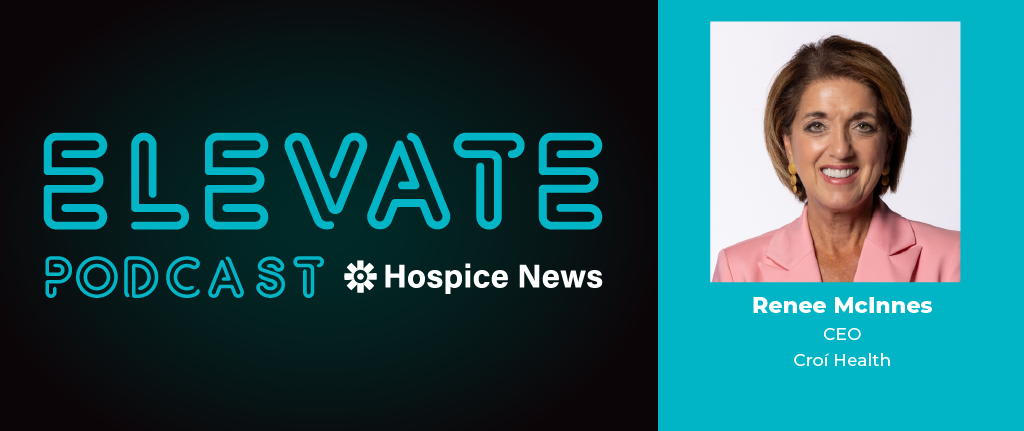
This Hospice News Elevate podcast features a conversation with Croí Health CEO Renee McInnes about the scope of fraudulent activity in the hospice space. McInnes, a registered nurse, describes significant impacts on legitimate providers’ sustainability and patient access.
Massachusetts-based Croí Health provides hospice, palliative and home care. McInnes stepped into her current role at the nonprofit in 2016, which was formerly branded as NVNA and Hospice. She also serves on the National Alliance for Care at Home’s Advocacy Committee and advocates for policies strengthen access to high-quality home health, hospice and palliative services.
Hospice News sat down with McInnes to examine how hospices are navigating myriad challenges of program integrity issues as regulatory agencies work to address them.
Editor’s note: The following transcript has been edited for length and clarity.
What is your perspective on the current state of fraud, waste and abuse in the hospice space?
This has been going on for many years. We have been really focused on the bad actors and not the good actors. So, we don’t want to be punished with more regulations, less payment or moratoria, because we have such high quality and we have so much integrity and compliance.
But there is a lot of fraud and abuse. There really is, and it’s true and it’s real. How do you identify it? It’s looking at how do we prevent these organizations from starting new hospices, instead of spending more resources on what we are doing afterwards. What happened with technology and AI is that there are criminal organizations stealing Medicare numbers from the system. That’s where crime just escalated with technology … so that became a huge problem. Criminals are always one step ahead.
What are legitimate providers most concerned about when it comes to the more recent trends in fraudulent activity in the hospice space?
We’re working really hard on how consumers know when they’re in a crisis. How do you know how to find a legitimate organization that has good quality?
If the regulations only continue for the overall population of home health and hospice organizations to escalate, there’s a huge cost to that. Every time we have an audit, it’s time and money. So, that’s a concern we have. How can they do legitimate, targeted probes without costing time and money to the organization?
With AI and technology … fingers crossed [that] it’s going to improve. Using that technology, all that data we send in when we evaluate a patient, they have right at their fingertips. There should be certain red flags that allow them to say how they’re going to target and do an audit.
What do you foresee as far as the most significant obstacles for legitimate hospices amid ongoing regulatory attempts to improve program integrity issues? What are the ways to address these challenges?
It’s an everyday challenge.
It’s absolutely an extra layer … and a lot of internal auditing that we do ourselves for surveys. We need to continuously upgrade our technology and no one is reimbursing for that. That’s our indirect cost and it just keeps going up. Medical supplies have gone up significantly, drug costs have gone up for our hospice patients. The cost- per- day has gone up to take care of these patients. That’s the biggest challenge. The expenses just keep going up, and the revenue just doesn’t make it right.
What does all of this fraudulent activity mean for the future? Will it make it harder to access hospice?
It’s a complex one. There’s so much information out there. This is really people thinking about and caring about how we increase access to care for patients. We don’t want an overall moratorium. How do we prevent that from happening so that there is access and there are legitimate organizations that are able to thrive and new organizations that can come to the market?
Listen to the Elevate podcast in full here:
Companies featured in this article:
