


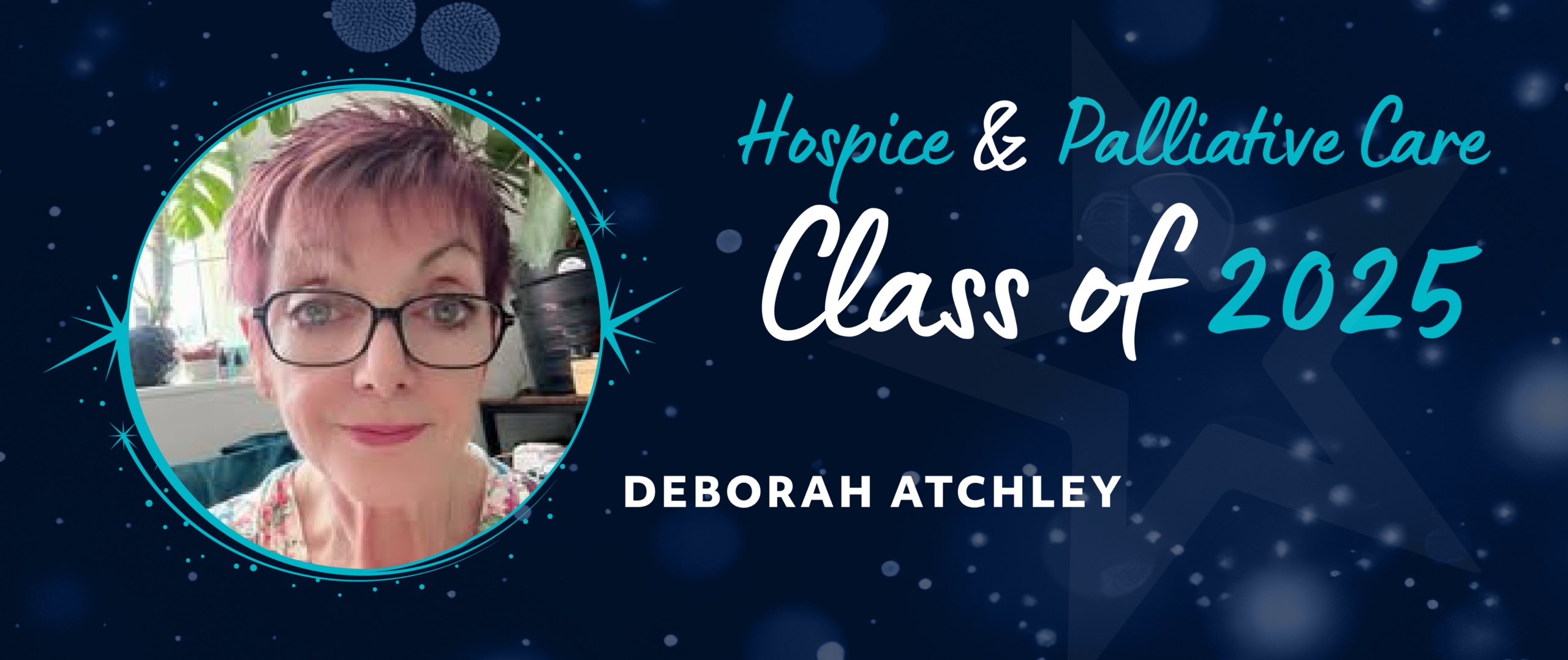


Deborah Atchley, Social Worker at St. Francis Hospice, has been named to the Frontline Honors Awards Class of 2025 by Hospice News.
To become a Frontline honoree, an individual is nominated by their peers. The candidate must be:
- A dedicated, high-performing frontline worker who delivers exceptional experiences and outcomes
- A passionate worker who knows how to put their vision into for the good of their respective industry, the patients and residents they serve, and their families
- An advocate for their industry and their fellow colleagues
Hospice News recently caught up with Atchley to discuss her time in the hospice & palliative care industry.
HSPN: What drew you to this industry?
Atchley: After working in the medical field of social work for over 20 years, I have always been drawn to helping people with their end of life journey.
In the hospice field, I can be genuine, compassionate, and assist people at their most vulnerable times. In other medical and social work fields, there are so many barriers and blocks, but in hospice, I am allowed to show my heart and share it with others.
HSPN: What’s a misconception you had about this work before you started – and how has reality differed?
Atchley: Many people assume that hospice is just the last few days of life. While this can be true, it also helps people manage symptoms and improve quality of life leading to more time with their loved ones.
This is a gift hospice can provide to the patients and families to share more memories and experiences. Some people think hospice limits life expectancy and “helps people to die,” but, in reality, hospice provides the gift of time.
HSPN: Was there a moment in your career when you realized, “This work really matters”? What happened?
Atchley: I was working in the health industry, trying to get durable medical equipment (DME) for patients. The struggle was unreal, and people were left suffering waiting on bureaucracy to resolve in order to get them much-needed DME. It was at this stage I decided that hospice provides equipment to help patients keep safe in their homes, and hospital beds in just hours, not weeks. I felt the compassion and support hospice give to their patient was more in-line with my own morals. They really strive to make a person comfortable, whatever their end of life journey looks like.
HSPN: What’s the most valuable skill you’ve developed on the front lines that people often overlook?
Atchley: The most important skill is meeting the person where they are at and joining them on their journey. This involves allowing individuals and families to talk about their journey, getting to know them and their families, hearing of their experiences, and what led them to be where they are in that moment. This is important to assess their current needs and those moving forward to provide the best care at the end of life.
I have developed the skills to navigate through difficult subjects, to enable families to make choices at the end of life, plan for tomorrow, and ensure their understanding of services available and make sure they feel supported, educated and heard.
HSPN: What’s one decision leaders make that has a bigger impact on frontline workers than they might realize?
Atchley: Lack of communication as to why they are implementing certain policies or procedures or making decisions. This affects the overall morale and limits the trust between leadership and frontline workers.
HSPN: What’s a simple change – policy, tool, or mindset – that would make frontline work more effective?
Atchley: Transparency of policy, fostering regular feedback and a growth mindset, organizations can empower frontline workers, leading to higher effectiveness and morale. This helps address issues quickly and fosters a culture of openness. Also, promoting the idea that mistakes are opportunities for growth.
HSPN: What gives you optimism about the future of this industry, despite its challenges?
Atchley: The compassion of the human heart I see day in and day out working in hospice keeps me going. There are days when working with others and taking on their grief, pain, and overwhelming feelings seems too much, however, seeing the love of the human heart of the families surrounding the patients, and the care being provided by the staff, is what helps me to continue on my mission to serve individuals and families with all the love my heart can give. I see and feel it in those around me and we strive to make every person we serve leave this world with nothing but comfort, peace and dignity.
