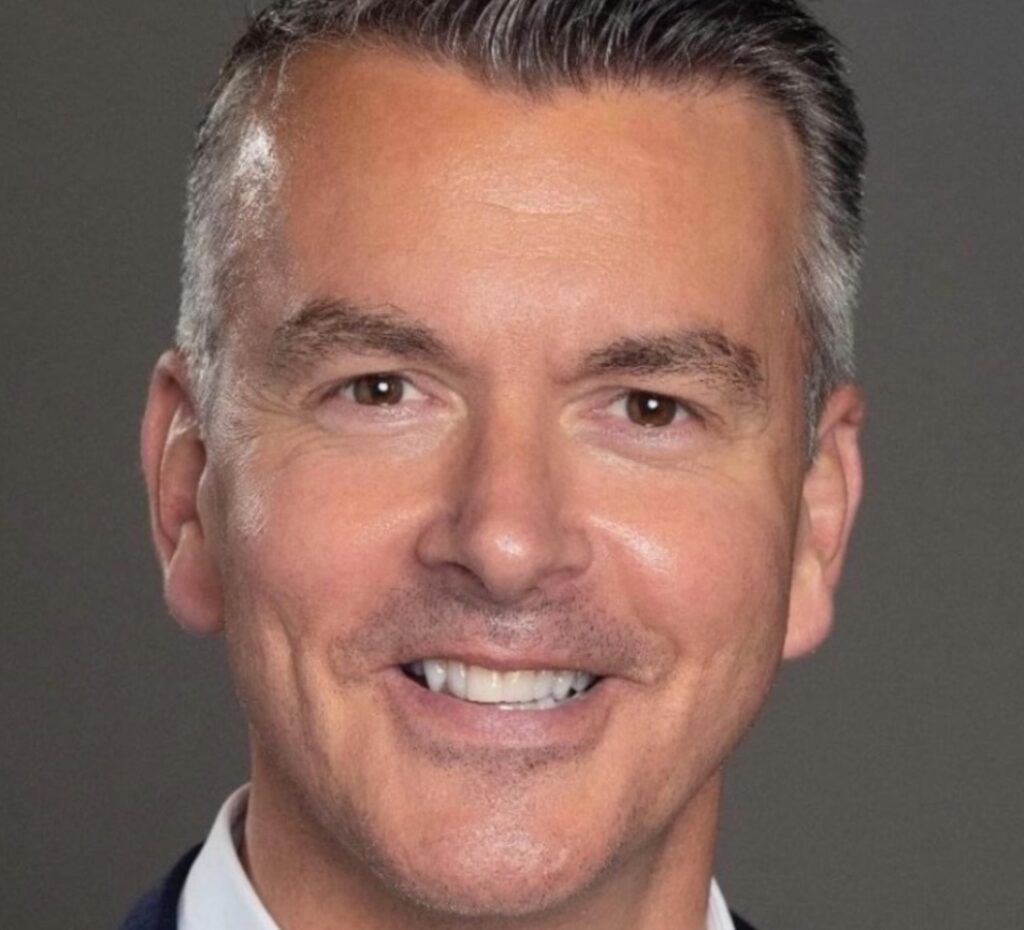
Workforce, access to care, reimbursement and public policy are top agenda items for the American Academy of Hospice and Palliative Medicine as new CEO Pierre M. Désy takes the reins.
AAHPM is the professional organization for physicians specializing in hospice and palliative medicine, nurses, and other health care providers, dedicated since 1988 to advancing hospice and palliative medicine and improving the care of patients with serious illness.
The Canadian-born Désy began his career in the advocacy group space with the Emergency Nurses Association in 2000, where he worked in research. He later became a certified association executive and took on his first leadership role as an executive director with the International Association of Oral Maxillofacial Surgeons His first tenure as a CEO was for the Society of Gynecologic Oncology.
Hospice News sat down with Désy to discuss the academy’s current priorities and the top issues facing hospice and palliative medicine.
Could you tell me some of your top priorities as you come into this new role?
I have been focusing on listening and alignment. So the first part is a listening tour and relationship building tour, where I’m talking with every board member, one on one. I’m talking with committee chairs, council chairs. I’m speaking with all of our partners, every staff person, sponsors and individual donors.
It is really about gaining a complete view of the needs, the risks and opportunities, and gathering all that information. I have already witnessed some key topics that are rising. The key themes that are becoming repeated. So that’s really a big part of what I’m doing.
Then it’s also about assessing and alignment. I’m working right now with one of our really important consultants in looking at the environmental scan that was done prior to finalizing the current strategic plan. We’re then identifying new threats or opportunities, considering the current political and administration and environment that we are in to ensure that our resources and our tactics are still in alignment or that matched phase realities.
We conducted a pulse check survey with the board and staff and committee chairs to inform that conversation that will happen at the board meeting in October. So we’re just doing a bit of a deep dive.
What is very important to me is also advancing our policy priorities that are central to patient access and clinician sustainability in terms of payment, workforce sustainability, quality and access to medicines and quality of care. All that and certainly our commitment to diversity, equity, inclusion and justice, which is core value to the academy, and that is something that continues to be a priority.
You mentioned some key themes that came to the surface in your discussions. Could you give a couple examples?
I will speak to that certainly, one is access to high quality hospice care. In my conversations with multiple members that need to promote overall quality of care, but especially hospice care being a strong priority came up multiple times. The demand and the need for high quality end-of-life care has never been greater. The need for hospice and care practitioners is expected to continue to grow exponentially, as the population is aging.
One for sure is program integrity related to hospice and payment and the quality and reporting. We know that the pace and details of the federal rule making continue to shake things up for providers and directly impact patient access. We know that one big change is that [the U.S. Centers for Medicare & Medicaid Services (CMS)] is officially moving from the Hospice Item Set to the Hospice Outcomes and Patient Evaluation [HOPE] assessment tool.
That is to start officially on Oct. 1, but we know that it’s already raising a lot of questions around change management and how to be ready in the field to really adapt this change in a timely fashion. And then there’s a lot of anxiety around the 4% penalty in reimbursement associated with not complying with that change. So that is something that we are sort of addressing and advocating for to support that at least be a bit more flexible and certainly related to payment.
We have submitted a comment letter in response to the Medicare Physician Fee Schedule proposed rule. The letter includes comments essentially on provisions related to physician payment quality and ambulatory specialty model, and it was developed with input from both public policy and our quality committees.
Another thing and topic that really raised to the top is really about advancing research in our field at AAHPM, hospice and palliative medicine. We are supporting and applauding the Ascent Consortium, which is advancing the science of palliative care research across the lifespan. Most of these individuals, if not all of those principal investigators, are members of the academy, some of them board members very close to us. The consortium has a $64 million, five-year [National Institutes of Health] grant.
Essentially that is all about increasing research. They will be focusing on providing resources and expertise and coordinating across 24 institutions to advance innovative and high quality research for those living with serious illness and those who care for them.
On the policy level, something that came up and we are working on is timely and equitable access and also workforce efficiency. So for us, in terms of access, something that is really key is to make sure that the telehealth flexibilities that are due to expire at the end of September are extended.
We are working hard and have an action alert that we send to all members urging them to write to Congress to support the Telehealth Modernization Act. That has resulted so far in over 1,100 messages sent to Congress by our members. So that’s pretty impactful.
Could you say more about how you’re working to achieve some of the goals you’ve mentioned?
There’s also issues related to the importance of palliative care quality that we’re also focusing on. We know that it is a game changer for people, and we know that palliative care for families dealing with serious illnesses is not just about managing pain, but it also helps with the emotional and practical challenges that come with being sick.
So, when patients receive palliative care alongside treatments, we know that they tend to avoid unnecessary ER visits and sometimes hospital stays, and some even live longer.
There are in the United States around 13 million adults and 700,000 children that could benefit from this kind of support every year. So, it’s about improving quality of life, not just extending it. That’s something else we are certainly wanting to keep an eye on and stay focused.
What’s the academy’s role in addressing some of these issues?
At the core, the mission of the academy is really about enhancing learning and cultivating knowledge and innovation and strengthening workforce and advocating for public policy to achieve our vision, which is that all patients, families and caregivers who need it will have access to high quality hospice and palliative care.
So our role then is really to lead and convene. It’s about positioning the academy to set the direction and amplify interdisciplinary expertise, convene stakeholders so that our patients, families and caregivers and clinicians benefit from this coordinated, high-quality care.
It is also about advocating effectively. It’s through our Washington presence. The academy pursues our policy agenda focused on workforce, access and payment and research and medications, quality and program integrity. It’s also about mobilizing members to shape federal rules and legislation.
We also serve as the academy to advance quality science. We’ve developed patient-reported experience measures that look at things like symptom management and communication. So we also have pulled together resources that help programs actually put quality improvement into practice and get ready for federal reporting requirements.
It’s about education and growing the workforce. Our role is really to provide, develop and provide in partnership with all of our members and experts in the field, developing education and training and publications and community building to strengthen the talent pipeline.
We’re all working together toward the same goal — to improve the quality of hospice and palliative care. I look forward to really continuing to strengthen those relationships and collaborate on high-impact efforts to advance the field.
Companies featured in this article: